The decision affects far more than upfront cost. Long-term operational efficiency, maintenance frequency, and system safety all hinge on selecting the valve that matches your pressure rating, fluid characteristics, space constraints, and duty cycle. In high-pressure steam systems, a gate valve's tight sealing and minimal pressure drop can prevent leaks that compromise safety. In large-diameter water treatment plants, a butterfly valve's compact footprint and lower cost can deliver the same flow control at a fraction of the weight and expense.
Key Takeaways
- Gate valves use a rising gate mechanism for full on/off control with near-zero pressure drop when fully open
- Butterfly valves use a rotating disc for fast operation and flow modulation across a range of pressures
- Butterfly valves are lighter, more compact, and cost significantly less at diameters of 12 inches and above
- Gate valves offer superior sealing, near-zero pressure drop when fully open, and handle high-pressure, high-temperature systems better
- The right choice depends on pressure rating, fluid type, space constraints, and maintenance requirements — no single valve fits every application
Gate Valve vs Butterfly Valve: Quick Comparison
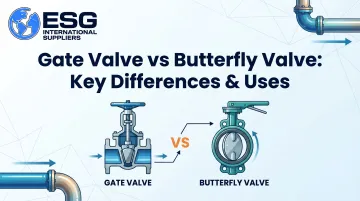
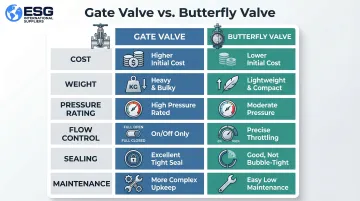
Gate and butterfly valves serve the same basic function, but they differ significantly across cost, size, pressure rating, and flow control capability. Here's how they stack up across the six factors that matter most in industrial selection:
| Factor | Gate Valve | Butterfly Valve |
|---|---|---|
| Cost | Higher purchase and install cost; gap widens with pipe size | 40-60% cheaper at 12-inch diameter and above |
| Weight (12-inch) | 300-500 lbs; rising-stem designs need vertical clearance | 80-150 lbs; compact and easy to install |
| Pressure Rating | ASME Class 1500 and beyond | Low-to-moderate; triple-offset designs reach Class 1500 |
| Flow Control | On/off only — partial opening causes seat wear and turbulence | Throttling and modulation; disc position controls flow rate |
| Sealing | Bi-directional, near-zero leakage | Adequate for most applications; minor leakage in resilient-seated designs |
| Maintenance | Complex internals; more frequent service intervals | Fewer moving parts; lower maintenance frequency and cost |
If your application involves high-pressure service or tight shut-off requirements, gate valves are the stronger choice. For large-diameter, low-to-moderate pressure systems where space and weight matter, butterfly valves offer a practical and cost-effective alternative.
What is a Gate Valve?
A gate valve is a linear-motion valve that controls flow by raising or lowering a gate (disc) perpendicular to the fluid path. It's a full-bore valve, meaning its internal diameter matches the pipe, resulting in minimal flow restriction when fully open. This unobstructed bore makes gate valves ideal for applications requiring zero pressure drop, such as pipeline pigging systems and high-pressure transmission lines.
Gate valves operate via a multi-turn handwheel requiring more than 360° of rotation to move the gate up or down through a threaded stem. This slow operation is intentional—gate valves are designed strictly for fully open or fully closed positions. Partial opening causes turbulence and accelerates disc and seat wear, making gate valves unsuitable for flow throttling or modulation.
Gate Valve Subtypes
Several gate valve designs exist to handle different media and pressure conditions:
Wedge disc gate valves are the most common design. The wedge-shaped disc seats against two inclined surfaces, creating high wedging force for tight sealing—the workhorse of high-pressure oil, gas, steam, and water pipelines.
Knife gate valves feature a beveled cutting edge that slices through slurry, viscous media, and suspended solids. These excel in mining tailings systems, paper pulp processing, and wastewater treatment where standard gate valves would clog.
Double disc gate valves use a two-disc design with a spreading mechanism between them to enhance sealing. This suits applications requiring double block-and-bleed isolation for maintenance safety.
Bonnet construction also varies by service condition:
- Screwed bonnets — low-pressure systems
- Bolted bonnets — moderate pressures
- Pressure-sealed bonnets — mandatory for high-pressure chemical plants and refineries
Materials Matter
Body and seal materials are selected based on fluid type, temperature range, and corrosion exposure:
Body materials:
- Cast iron — water service
- Cast steel — moderate pressure
- Stainless steel — corrosive fluids
- Brass — plumbing applications
Seal and disc materials:
- EPDM and NBR elastomers — standard service
- PTFE (Teflon) — chemical resistance and high temperatures
Use Cases of Gate Valves
Gate valves dominate high-pressure pipelines in oil & gas transmission, steam systems, and chemical plants where zero leakage and bi-directional flow integrity are non-negotiable. Gate valves hold over 26% of the U.S. industrial valve market, driven primarily by oil and gas sector demand for controlling crude oil and natural gas in pipelines.
Their advantage in pipeline pigging and swabbing systems is unmatched. Through-conduit gate valves meeting API 6D specifications allow pipeline inspection gauges (smart pigs) to pass through without obstructing the line bore or damaging valve seats. TC Energy utilizes these valves across its North American oil and natural gas pipeline network to facilitate smart-pig inspections for integrity monitoring.
What is a Butterfly Valve?
A butterfly valve is a quarter-turn rotational valve with a disc mounted on a central stem. Rotating the handle or actuator 90° moves the disc from fully perpendicular (closed) to fully parallel (open) to the flow. Partial disc positioning enables flow modulation—a capability gate valves lack entirely.
Speed Is the Defining Advantage
A butterfly valve opens or closes in a single quarter-turn, making it ideal for frequent cycling or emergency shut-off. But this speed comes with a trade-off: rapid closure can cause water hammer in liquid systems, generating pressure surges that damage pipes and fittings. Adding a gear operator slows operation to mitigate water hammer, though this sacrifices the speed advantage.
Butterfly Valve Subtypes
Three main configurations cover most applications:
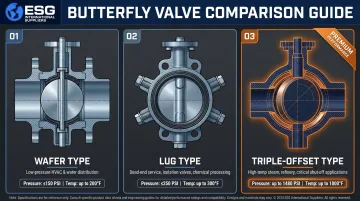
- Wafer — sandwiched between flanges without through-bolting; the most economical option, though the upstream flange must stay in place during maintenance
- Lug — threaded inserts allow direct flange bolting, so one side of the pipe can be removed without supporting downstream piping
- Triple-offset (high-performance) — metal-seated, eccentric disc design rated up to ASME Class 1500 and 538°C, suitable for high-pressure and high-temperature service
Disc design also matters. Concentric (zero-offset) discs seal by compressing a resilient seat, causing wear with each cycle. Eccentric designs (double- and triple-offset) reduce friction and extend seat life by using a cam action to lift the disc away from the seat during opening.
Material Options
Body materials include cast iron (standard water service), stainless steel (corrosive environments), and carbon steel (general industrial use). Seat materials range from EPDM, FKM, NBR, and XNBR elastomers for resilient-seated designs to metal seats in triple-offset valves for extreme temperatures and pressures.
Use Cases of Butterfly Valves
Butterfly valves dominate large-diameter piping in water treatment, HVAC systems, chemical processing, and fire suppression—applications where space efficiency, fast operation, and flow throttling matter more than zero-leakage sealing. The water and wastewater treatment segment accounts for 37.5% of the global butterfly valve market—driven by the valve's cost and footprint advantages at large diameters.
Municipal procurement records confirm a hard shift toward butterfly valves at diameters of 12 inches and above, driven by compounding savings in material, installation labor, and physical footprint. The weight difference is significant:
| Valve Type | 12-Inch Weight |
|---|---|
| Butterfly valve | 80–150 lbs |
| Gate valve | 300–500 lbs |
That 2–4× weight reduction simplifies installation and cuts structural support requirements on every large-bore application.
Gate Valve vs Butterfly Valve: Which One Should You Choose?
Five primary factors should guide your decision:
1. Operating Pressure
Choose gate valves for high-pressure systems above 600 PSI (ASME Class 300+). Their wedge-disc design and heavy-duty construction handle steam, oil, and gas transmission pressures that would compromise resilient-seated butterfly valves.
Choose butterfly valves for low-to-moderate pressure applications below 300 PSI (ASME Class 150-300). For higher pressures, specify triple-offset metal-seated designs rated to your system requirements.
2. Flow Control Requirement
Choose gate valves for strict on/off service. Never throttle a gate valve—partial opening accelerates wear and creates destructive vibration.
Choose butterfly valves when you need flow modulation, throttling, or variable flow rates. The disc position directly controls flow, making butterfly valves ideal for HVAC balancing, chemical dosing, and process control.
3. Space and Weight Constraints
Choose butterfly valves in compact installations or weight-sensitive applications. Their smaller footprint and lighter weight reduce structural requirements and installation labor.
Choose gate valves only when space and weight are not limiting factors.
4. Leakage Tolerance
Choose gate valves for zero-leakage critical applications such as hazardous fluid isolation, steam service, or regulatory-mandated tight shut-off.
Choose butterfly valves where minor seat leakage is acceptable. Resilient-seated designs meet ANSI/FCI 70-2 leakage standards but don't achieve the bubble-tight sealing of wedge gate valves.
5. Budget and Total Cost of Ownership
Butterfly valves cost less upfront, especially at larger diameters. A 12-inch butterfly valve can cost 40-60% less than a gate valve, with the gap widening at 16, 24, and 36-inch sizes.
However, butterfly valves in fully-open service can require up to 10 times more pumping power than equivalent gate valves. Lower flow coefficients (Cv) and the disc remaining in the flow path drive this difference. Factor energy costs into total cost of ownership for continuous-duty applications.
Water Hammer Risk Mitigation
Fast-closing butterfly valves create pressure surges in liquid systems. Key mitigation steps include correct valve sizing, actuator selection, and controlled closing speed. In mining dewatering systems, power plant cooling water, and municipal water distribution, specify gear operators or electric actuators with adjustable speed controls.
Industry-Specific Recommendations
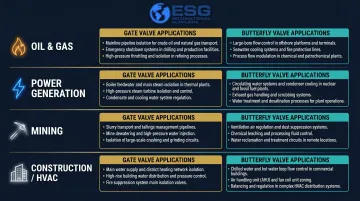
- Oil & Gas: Gate valves for pipeline isolation, wellhead shut-off, and service above 600 PSI; through-conduit gate valves in pigging-compatible pipelines. Butterfly valves suit lower-pressure gathering lines and storage tank service.
- Power Generation: Gate valves for steam isolation, high-pressure feedwater, and boiler blowdown. Butterfly valves are standard in cooling water, circulating pump discharge, and low-pressure service water across nuclear and thermal plants.
- Mining: Severe-service knife gate valves for slurry and abrasive pipelines; standard gate valves for dewatering discharge and high-pressure hydraulic lines. Butterfly valves work in ventilation and lower-pressure process water.
- Construction/HVAC: Butterfly valves for large-diameter water distribution, HVAC balancing, and fire suppression where space is limited and flow modulation is required.
Getting the specification right is only half the equation. ESG International Suppliers stocks gate and butterfly valves across the material grades and pressure classes covered in this guide, and works directly with procurement teams in North and South America to confirm that selections match actual operating conditions before the order goes through.
Conclusion
The gate valve vs butterfly valve decision isn't about which is better—it's about which fits your specific pressure rating, fluid type, space constraints, and operational frequency. As a rule: gate valves suit demanding conditions requiring zero leakage and full bore flow; butterfly valves suit moderate-service applications where speed, space, and cost efficiency matter.
Specifying the wrong valve type increases pressure drop, accelerates wear, and introduces water hammer risk — all of which drive up maintenance costs and cut into system uptime. Getting the specification right at the design stage is the cheapest fix you'll ever make.
Frequently Asked Questions
What is the difference between a gate valve and a butterfly valve?
Gate valves use a linear gate mechanism requiring multiple turns for full open/close and suit high-pressure on/off service with minimal pressure drop. Butterfly valves use a rotating disc that opens in a 90-degree turn, allowing faster operation and flow modulation at lower cost and weight.
What type of shut-off valve is best?
The best shut-off valve depends on the application. Gate valves are preferred for high-pressure, zero-leakage requirements in oil, gas, and steam service. Butterfly valves suit fast-cycling, moderate-pressure applications in water treatment; ball valves handle compact, tight-seal shut-off in smaller pipe sizes.
Do plumbers still use gate valves?
Gate valves remain standard in industrial pipelines and municipal water systems where full-bore flow and high-pressure ratings are required. In smaller-diameter or general-purpose applications, ball valves have become more common due to faster operation and tighter sealing.
When not to use a gate valve?
Do not use gate valves for flow throttling or regulation—partial opening accelerates wear and causes vibration. Avoid them in applications requiring fast operation or where installation space is very limited and a lighter, more compact valve is needed.
What is the purpose of a wedge gate valve?
A wedge gate valve uses a wedge-shaped disc that seats against two inclined surfaces to create high-force, tight sealing. It's the most common gate valve design, used in high-pressure oil, gas, steam, and water pipelines where bubble-tight shut-off is critical.
What is another name for a gate valve?
Gate valves are also called sluice valves, particularly in water and wastewater applications. When the disc has a beveled cutting edge for handling slurry or viscous media, they're called knife gate valves or knife valves.